
§ 04.04Texas · Statewide · I-35 hail corridor
Texas is where we started.
DFW, Houston, Austin, San Antonio. The I-35 hail belt in between. The most storm-hit state in the country. The densest hail-claim market. The home turf where the playbook got built. 15 years and counting.
From Lubbock to Tyler, same-day to 48 hr.
Twelve months on the weather radar.
Texas housing rarely gets a quiet month. Peak windows tell you when to file. And when to call before everyone else does.
The most weather-violent state in the country.
Hail. Heat. Wind. Hurricanes on the coast. The rare ice event that takes the grid with it. Texas housing is a year-round design problem. The carrier knows it too.
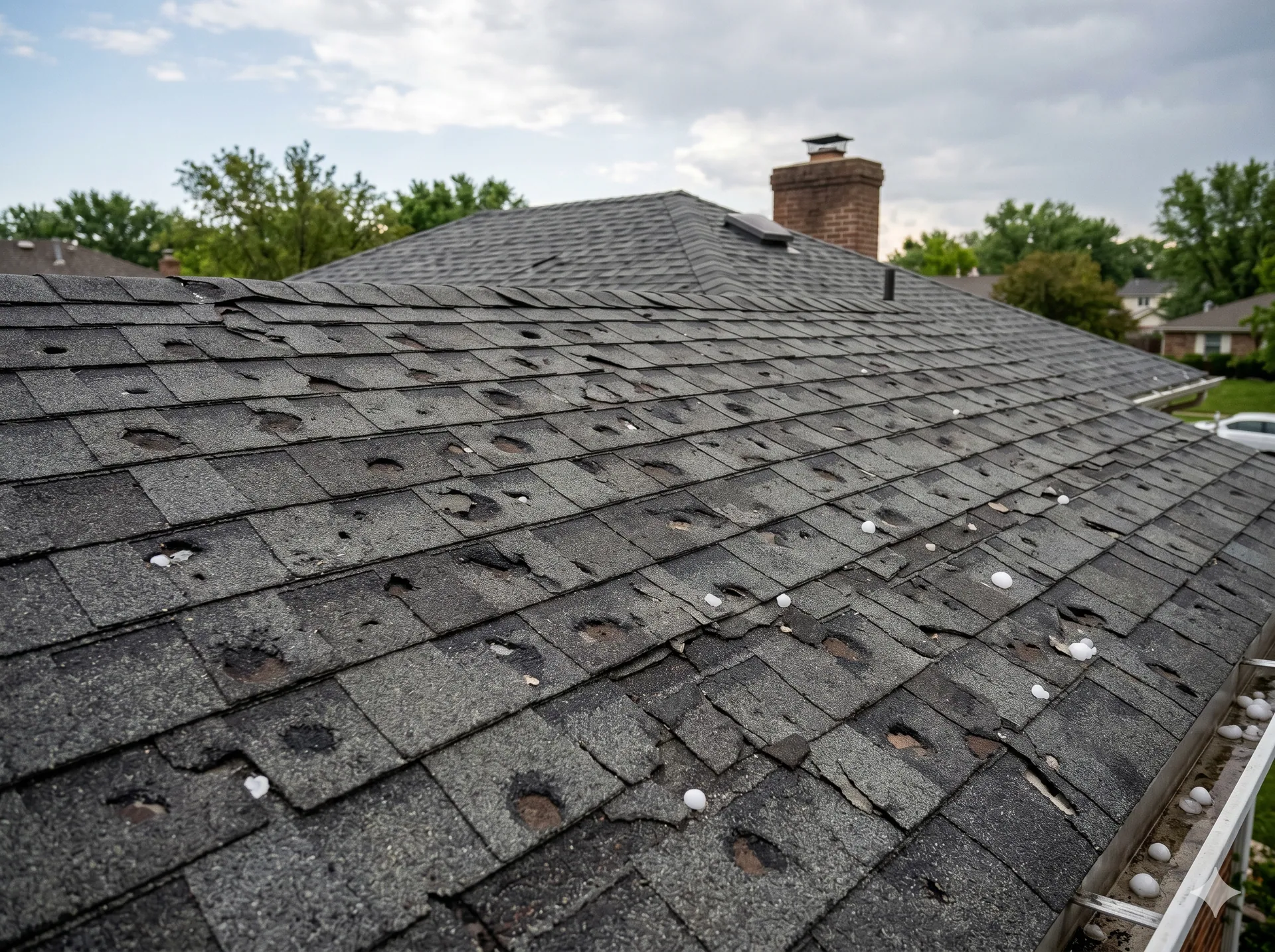
Texas led the country with 878 major hail events in 2024. A 167% jump on the year. Insured storm losses topped $10 billion. The 2025 cycle drove $52B more. The hail belt runs I-35 from Waco to Oklahoma. The densest hail map in the country.
Hail season runs March to June. It peaks in May. Tornado season rides the same supercell engine. Texas sees about 135 tornadoes a year. May is the peak at 41. The 1999 high of 172 still tops the list.
Heat is year-round. La Puerta hit 116°F in May 2024. Abilene hit 113°F in August. Austin and San Antonio broke May records past 107°F in 2025. Weeks of 100°F+ heat age asphalt. Fail caulk. Fade siding. Break a small HVAC.
Hurricane seasonruns June to November. The Gulf Coast takes the hit. Beryl hit Matagorda in July 2024. It cut power to 2.7 million homes. Past Ike's 2.1 million in 2008. It now ranks with Alicia and Ike as one of Houston's three biggest wind events. Winter ice is rare but harsh. Storm Uri in 2021 cut power to 69% of Texans. It killed an estimated 246. Texas housing is built for heat, not cold.
Four metros, four storm profiles.
No two Texas metros file the same claim. DFW is hail and the adjuster backlog. Houston is hurricane and long outage. Austin and San Antonio sit on the west edge of the hail belt. They trade hail volume for heat.
DFW — #1 hail-risk metro
Dallas County has the top yearly hail loss of any US county. Roughly $102.8M a year in a quiet year. May 2024 storms drove $2.3B in damage across North and East Texas. The DFW pattern is golf-ball to softball hail. Many events per spring. A long adjuster backlog at peak. We dispatch same-day inside the metro. 24 to 48 hours to the rest of the state.
The hurricane and tropical-rain metro
Beryl in 2024. Harvey in 2017. Ike in 2008. Alicia in 1983. The Houston file is wind-driven debris. Long outages. Water in the wall. Hail is second. Hurricane policy detail matters more here than in any other Texas metro. Named-storm deductibles. Wind/hail riders. The question of whether ALE is real coverage or a $250 line item.
Western-edge hill country
Hail risk is real but spotty. These metros sit on the west edge of the hail belt. Heat drives the loss too. Austin's May 2025 wave broke old records. Flash flood and tornado outbreaks pile on. The insurance posture mirrors DFW. Same rate-protect on weather claims. Same prompt-pay timeline. Same percent-deductible math. We work both metros on a 24 to 48-hour deploy from Dallas.
DFW + plains-supercell exposure
Tarrant County shares the DFW hail pattern. It adds west-edge exposure to plains winds out of Oklahoma. Wind-driven hail at off angles is the signature here. Back walls and side gables get hit harder than the front slope. That is the damage adjusters often walk past on the first pass. We log all four walls.
The five DFW counties we cover.
Each county files claims a bit differently. Storm tracks, housing vintage, and carrier mix vary. Click through for the county view. What hits, what carriers want to see, which streets we're on every spring.
Five rules every Texas homeowner should know.
Carriers have tightened the rulebook over the last five years. Here is the short version Texas homeowners need before they file. Or before they sign anything a contractor put in front of them.
The rate-protection rule
Texas insurers cannot cancel or surcharge a homeowners policy over a weather claim. A wind or hail claim cannot raise your rate or non-renew you. It is the most ignored homeowner rule in the state. The single biggest reason most Texas homeowners should file when they have damage.
No matching law (line-of-sight argued)
Texas has no formal matching statute. The lever is the like kind and quality wording in your policy. Plus the line-of-sight argument. If the new shingle, siding, or paint reads different from the next undamaged run, the carrier owes the broader replacement to match. We log the dead color or profile and file the supplement.
AOB-hostile state
Texas is hostile to AOBs. Anti-assignment text in homeowner policies holds up. Contractors who try to bargain via limited power-of-attorney risk unauthorized-practice exposure. RA does not take AOBs in Texas. We work as your contractor on the approved scope. Not as a proxy for your insurer.
Deductible-waiver prohibition
Tex. Ins. Code §707.003: contracts of $1,000 or more tied to an insurance settlement must spell out that the homeowner owes the deductible. Waiving it is illegal. Any contractor who offers to "eat your deductible" is offering fraud. The deductible is what your policy says you owe. Nothing else changes that.
Percentage deductibles + the FAIR Plan growth
Average TX home premium hit $3,291 in 2024. Rates rose 21% in 2023 and 19% in 2024. Deductibles rose 24.5% from 2024 to 2025. Percent-based wind/hail deductibles (1 to 2% of dwelling value, often $5,000 to $10,000) now rule. Sub-$1,000 deductibles are under 5% of policies. 47% of Texas home claims in 2024 closed without payment. The Texas FAIR Plan grew from 66,500 policies in 2021 to 121,600 by early 2025. Working a Texas hail claim is a learned skill. Not a paperwork drill.
Statewide on a 24 to 48-hour clock.
DFW same-day. Rest of state 24 to 48-hour deploy when a storm hits. Coverage runs past the named cities. Call to confirm.
§ 06Reach the dispatch desk
Storm hit your Texas roof? Let's document it.
Free inspection. Drone photos on every wall. Carrier-format quote on your carrier's local price list. We won't push a reroof when a repair holds. We do this every spring.
(214) 578-9961