Drone, every elevation.
PhotographyFront, sides, back, accessory roofs. Hail signatures and matting patterns are easier to read at altitude than from a ladder.

§ 04.01Insurance claims · TX + OH
We are not your public adjuster. That talk belongs to you and the carrier. What we do is the doc work that makes the talk easy. Drone photos. Attic moisture. A line-item scope in the same software your adjuster uses. A real person on the roof when they walk it. We won't sell a reroof when a repair holds. DFW + Ohio.
Whether the carrier writes the first scope short or long, the file does the arguing. We bring all nine to every roof we inspect, indexed and stamped before the adjuster ever opens an email.
Front, sides, back, accessory roofs. Hail signatures and matting patterns are easier to read at altitude than from a ladder.
Pin-meter readings on decking, rafters, and the underside of any flashing penetration. Dry, wet, or borderline — the number goes in the file.
Dents on gutters, vent caps, and AC fins confirm hail size when the shingle bruising is ambiguous.
Comparable houses on the same hail track in the file as proof the storm hit at scale, not just one roof.
Public storm-events data filtered to your parcel for the date of loss. The carrier already pulls this — we put it in the file first.
Written in the same software the adjuster uses, on the carrier’s regional price list, on the same effective price date. Mismatched formats are the easiest thing for a desk reviewer to dismiss.
Rotted decking, multiple shingle layers, missing flashing — photographed before the new build covers the evidence.
Hidden damage filed as a supplement on the original claim number. No new deductible. Industry average $7,000–$8,000 per supplement.
Same person walks the roof, sits with the adjuster, files the supplements, and signs the final invoice. The homeowner is not the project manager.
Every claim runs the same six steps. A bad one runs on email. A good one runs on a paper trail. Here is the trail we leave on yours.
You call us before you call the carrier. We pull NOAA hail data for your parcel and pin the date of loss to the file before evidence starts oxidizing.
Hail size on file before the first phone call.
Four-elevation drone photos, pin-meter readings on the decking, and dent verification on gutters and vent caps. Three to five comparable houses on the same hail track go in the file as neighborhood proof.
Nine artifacts on file before the carrier writes a word.
The on-site walk is the highest-leverage hour of the entire claim. We hand the adjuster the file, walk every elevation together, and answer the questions in front of the damage instead of over email.
You stay in the conversation; we stand on the ladder.
The carrier writes a scope in the same software we use, on the same regional price list. When the formats match, there is nothing to argue over and the conversation moves to the actual damage line items.
Same software · same price date · same units.
Rotted decking, multiple shingle layers, missing flashing — photographed at the moment of discovery and supplemented under the original claim number. No new deductible.
Average supplement recovery: $7,000–$8,000.
Final invoice signed, Certificate of Completion submitted, recoverable depreciation released by the carrier. The file is yours to keep — full set of artifacts, scope, supplements, and final reconciliation.
You walk away with the dossier, not just the roof.
Most homeowners walk into a claim thinking about a $250 deductible and one check. The reality runs in three columns: the deductible you owe, the supplements you can still recover, and the depreciation the carrier holds back until the work is done. Here is what each one usually looks like on a Texas wind-and-hail claim.
Texas wind-and-hail deductibles are written as a percentage of dwelling coverage, not a flat number. Most policies land at 1–2%. On a $400,000 home that’s $4,000–$8,000 owed by you before the carrier writes a single dollar of repair money.
Most policies pay Replacement Cost Value (RCV) — but in two checks. The first covers Actual Cash Value (ACV, today’s depreciated price). The second releases recoverable depreciation, but only after the work is finished and the Certificate of Completion is filed.
Numbers are typical Texas figures (1.5% deductible on a $400k dwelling; the supplement average tracks recent industry reporting). Your policy is the source of truth — we read it together at the inspection.
These five questions filter most of the noise. Print them, save them, ask any contractor on your driveway — including us.
The right answer is yes. Mismatched estimate formats are the easiest thing for a desk adjuster to dismiss.
The right answer is yes. The on-site walk is the highest-leverage hour of the entire claim.
The right answer is photos at the moment of discovery, supplemented under the existing claim number — no new deductible.
The right answer is no. It is illegal in Texas under Tex. Ins. Code §707.003 and a regulatory red flag everywhere else.
Texas prohibits the same person from doing both on the same claim. Make sure you understand which role you are hiring before you sign.
Whether the carrier owes a partial repair or a full elevation depends on the state code governing your policy. Toggle the rule that applies to your address.
Texas has no formal matching statute. Lever: the like-kind-and-quality language already in your policy.
Texas has no formal matching statute. The lever is the like-kind-and-quality language already in your policy: when the new shingle is visibly different from the rest of the roof along a clean line of sight, the carrier owes the broader replacement under that policy term. We document the line-of-sight on each elevation and put neighborhood comp photos in the file so the argument is not theoretical — it is a labeled set of photos the adjuster can look at.
§ 12Continue the manual — related to this page
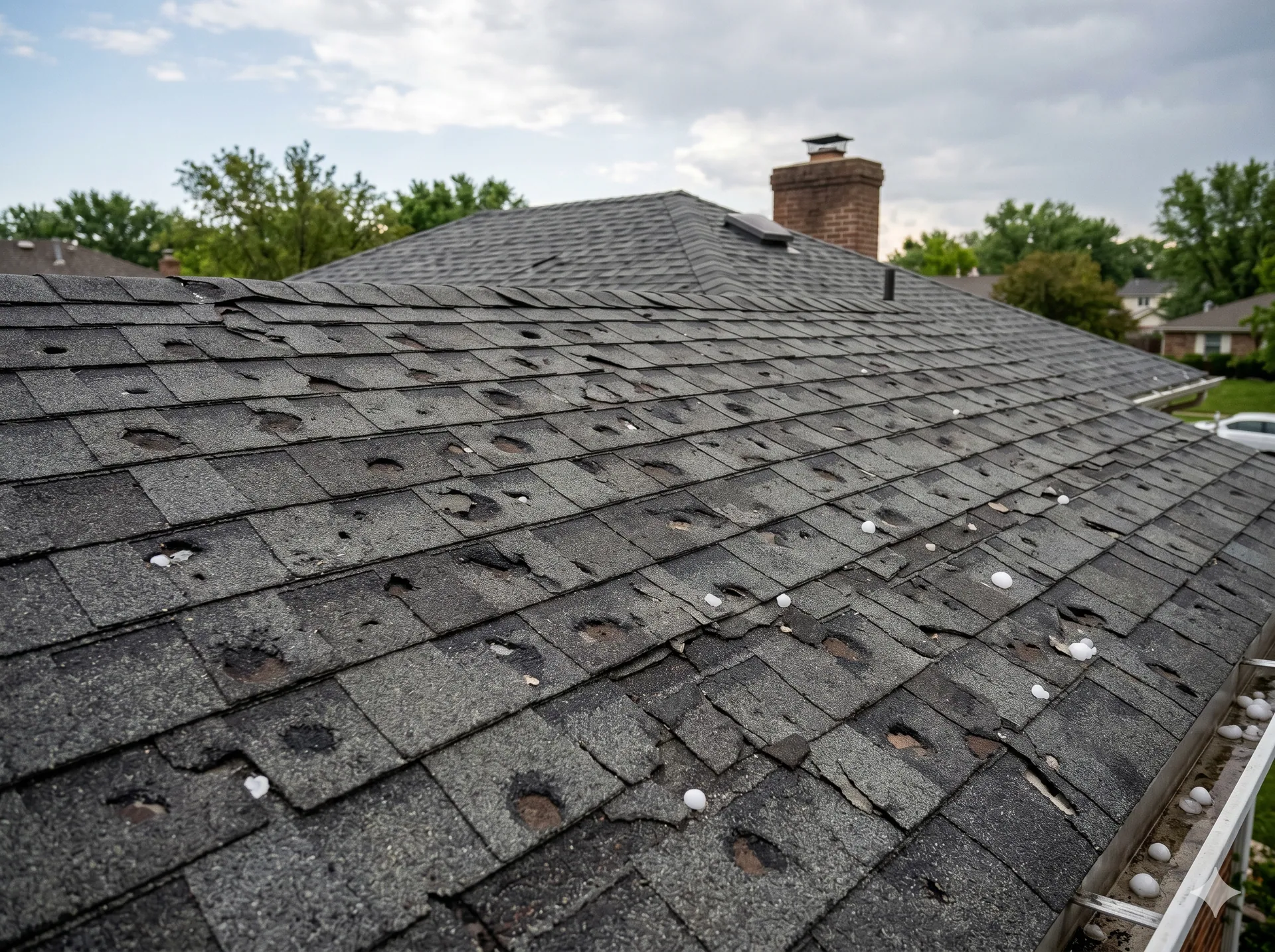
§ 01.04Roofing
Tarp first. Photo second. Walk the roof with the adjuster.
Same-day tarping if water is moving. Drone photo of every elevation. Soft-metal scale shots. We stand on the roof beside the adjuster — not in the parking lot afterward. 24/7 storm line.
Read →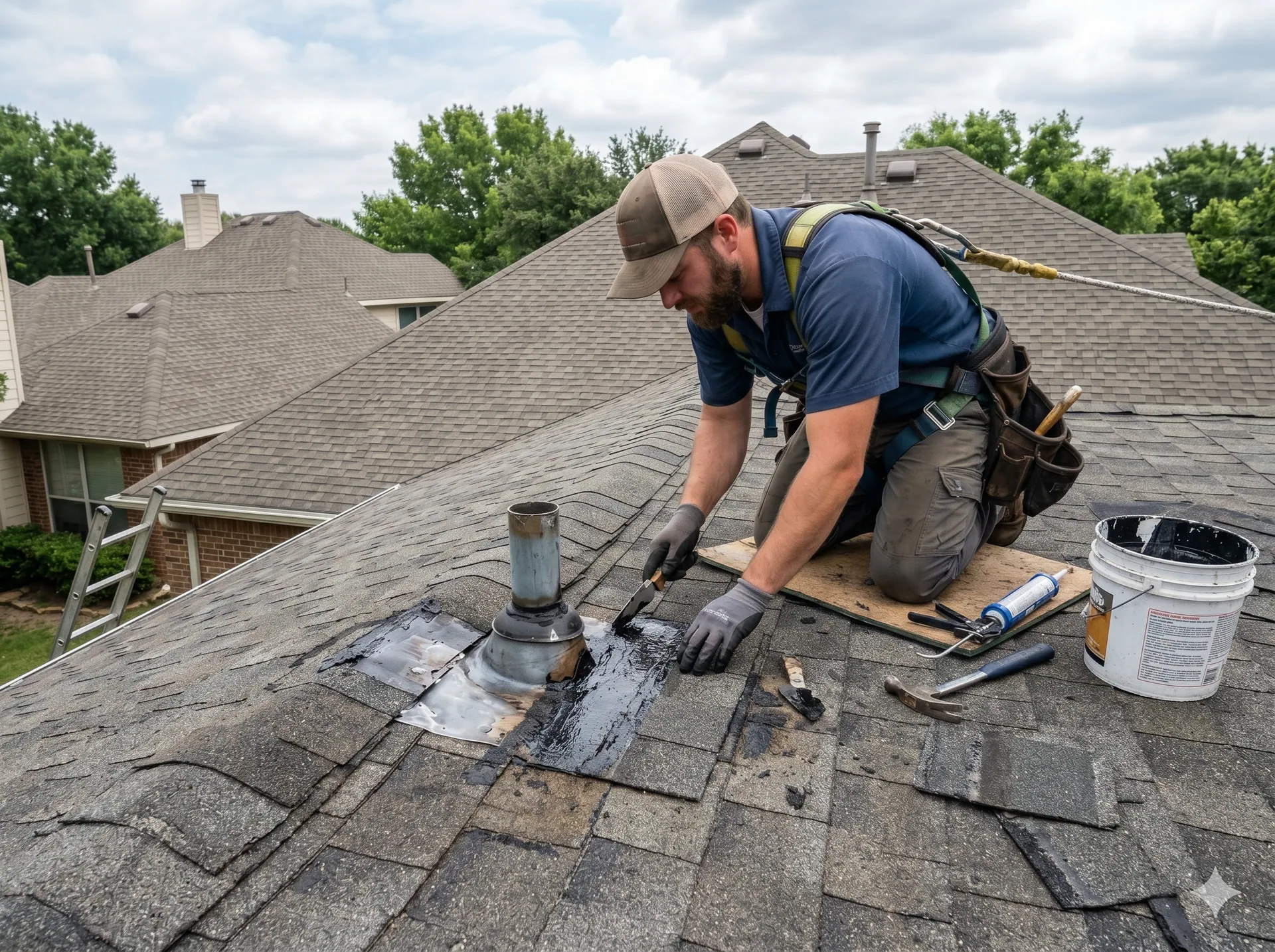
§ 01.05Roofing
The leak shows where water exits, not where it enters.
Trace from the ceiling stain back to the entry — pipe boot, kickout, dead valley, or not the roof at all. The fee credits back to a repair when the repair follows.
Read →
§ 03.08Remodeling
The board you see is one of seven layers.
Vinyl, LP SmartSide, and James Hardie — scored against your wall, your climate, and how long you plan to own. Sheathing first, wrap and tape next, rainscreen behind LP, then board, trim, and finish.
Read →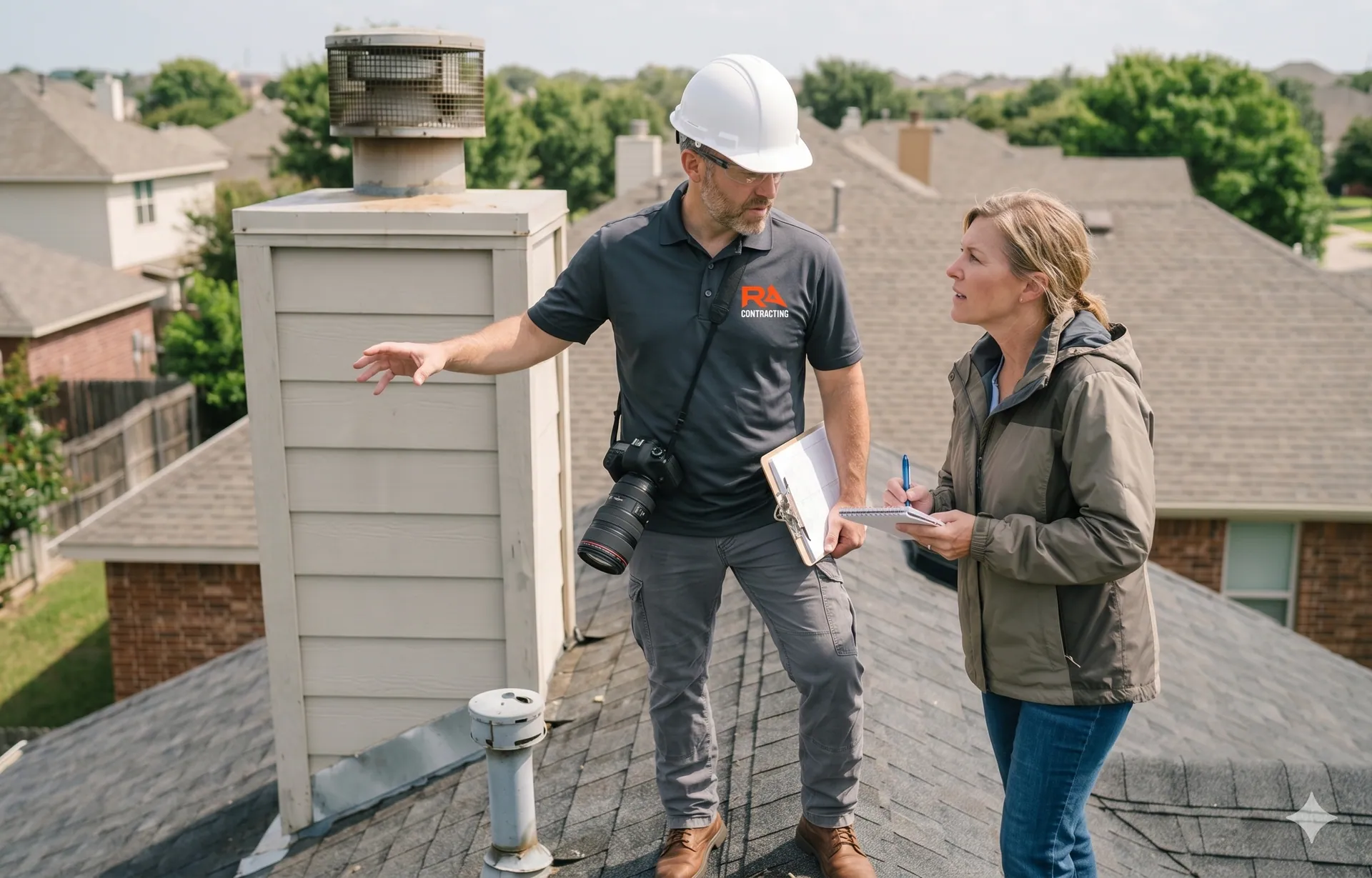
§ 01.06Roofing
A second opinion you can audit.
Seven-checkpoint walk, photos with the report, severity 1–5 on each finding, plain-language scope. Written PDF inside 24 hours. We won't turn the report into a sales call.
Read →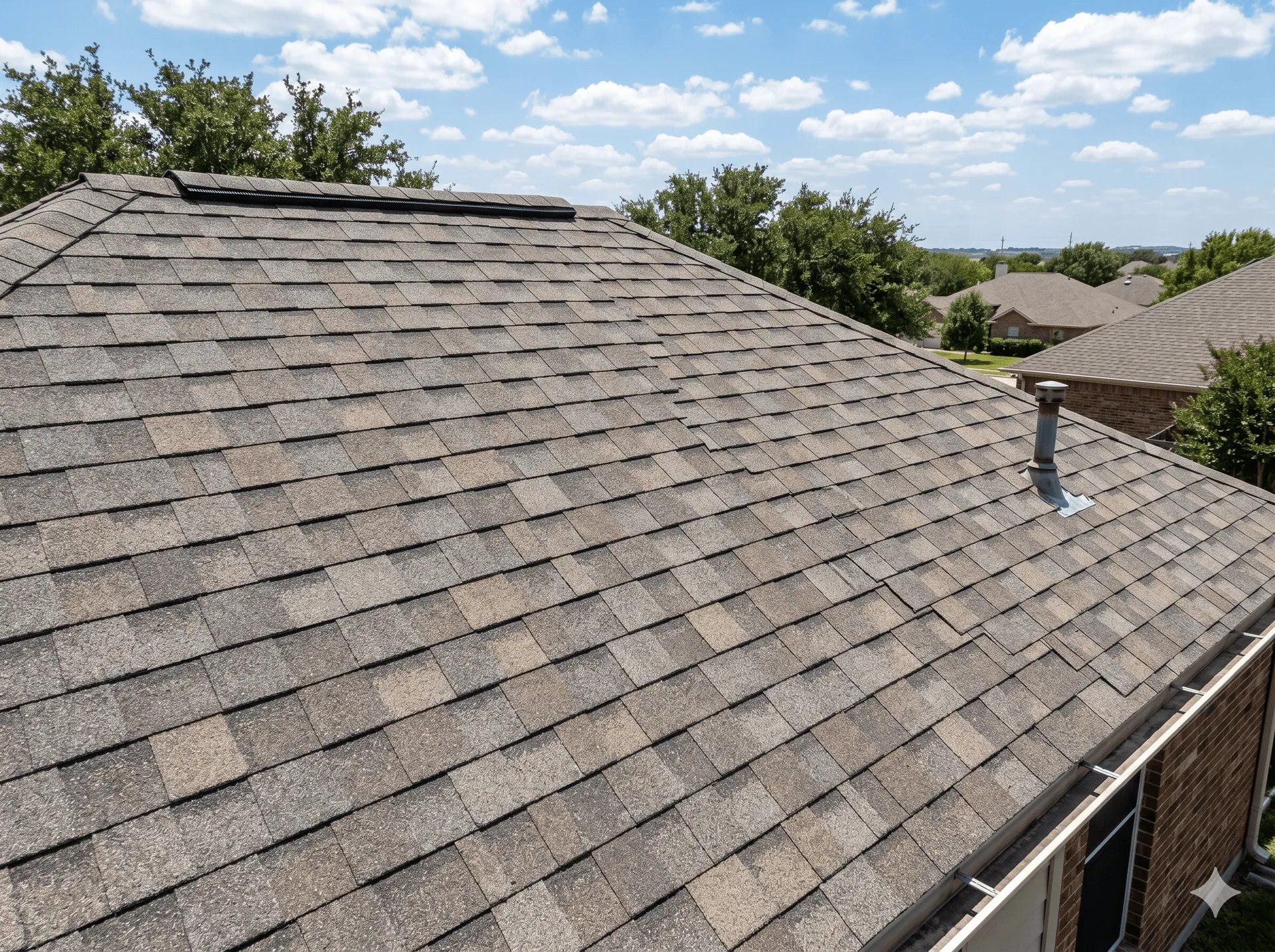
§ 01.08Roofing
One day on the roof. Twelve lines in writing.
Tear-off, no overlay. Twelve-line written spec on every contract. Balanced ventilation measured before bid. 25-year transferable workmanship warranty. Both states.
Read →§ 06Reach the dispatch desk
Evidence fades fast — soft-metal dents oxidize, granules wash off, neighborhood comp photos get repaired. Schedule a free inspection now and we put the nine artifacts on file before the carrier writes the first scope.
(214) 578-9961