
§ 01.12Commercial flat — DFW + Ohio
Five membranes. One diagnostic discipline.
The cheapest commercial roof to repair is the one we don't tear off. We start with an IR moisture survey on a clear night. The data picks the path — repair, partial, or full. We won't sell a tear-off the building doesn't need.
Diagnose the assembly. Then scope the work.
The IR moisture survey takes a single night. It tells us whether the substrate can carry another decade of membrane or whether the assembly is past saving. The data picks the path.
Infrared moisture survey first.
A nighttime IR scan maps wet insulation under the membrane. The data tells us whether the substrate is saturated (tear-off) or whether the membrane has open seams (targeted repair). We will not sell a tear-off the building does not need.
The 25 percent rule.
When less than 25% of the deck shows moisture, targeted repair is most often the answer. Above 25%, the substrate is too far gone to repair around. At that point, a tear-off is the honest scope. The IR data picks the path; not the bid sheet.
Probe-test every welded seam.
Machine-welded seams probe-tested at 10-foot intervals. A weld that looks closed but probes open is the most common failure point on a year-3 commercial roof. We document the probe map and hand you a copy.
Honest report on existing condition.
Not every commercial roof we inspect needs work. Sometimes the answer is "good for another five years; schedule a quarterly maintenance contract." We put that answer in writing too.
The right system depends on the building. Here is how we pick.
There is no single best commercial flat-roof system — there is the system that fits the building. Slope, traffic, chemical exposure, and tenant operations are the four axes that pick. Scan the register, compare against your roof, and ask us about the gap.
- M-01Single-ply membraneTPOMid-tier
White, reflective, machine-welded.
- Best for
- Most Texas commercial — retail, office, light-industrial.
- Cost note
- Mid-tier install · cool-roof discount often offsets a chunk
- Weak point
- Grease, fats, and many solvents degrade weld integrity.
- We use it on
- 60-mil minimum on TX commercial · 80-mil on roofs we expect to see hail.
- M-02PVC membranePVCHigher-cost
Chemical-resistant, ponding-tolerant.
- Best for
- Restaurant kitchens, light-industrial chemical exposure, ponding-prone areas.
- Cost note
- Higher upfront · longer service life in those conditions
- Weak point
- Overkill on a clean roof with positive drainage.
- We use it on
- Anywhere grease vents the roof · any roof we expect to pond.
- M-03EPDM rubberEPDMMid-tier
Stays flexible through deep cold cycling.
- Best for
- Ohio commercial buildings without ponding water.
- Cost note
- Mid-tier · seam reliability is the question, not the rubber
- Weak point
- Wrong choice for ponding water or chemical exposure.
- We use it on
- Ohio side · positive drainage assemblies · cold-cycling buildings.
- M-04Modified bitumenmod-bitMid-tier
Built to take foot traffic and rooftop equipment.
- Best for
- HVAC condenser farms, satellite arrays, weekly maintenance traffic.
- Cost note
- Mid-tier · two- or three-ply with granulated cap
- Weak point
- Heavier; wrong answer when energy reflectance is the goal.
- We use it on
- Roofs that crews walk on weekly · condenser-heavy assemblies.
- M-05Built-up roofBURMid-tier
Legacy multi-ply tar-and-gravel.
- Best for
- Existing BUR assemblies where conversion cost is prohibitive.
- Cost note
- Repair-only typical · we rarely recommend a new install
- Weak point
- Overtaken by single-ply for most applications since the late 90s.
- We use it on
- Compatible repair on existing BUR · we tell you when it isn’t worth saving.
Quarterly cadence. Tenants stay open.
The cost of a commercial reroof is not just the install — it is the disruption to your tenants during the work and the surprise repair bill three years in. We schedule the install around operations, and we contract the maintenance so neither one becomes your problem.
- Q1
Drain clearing.
Every primary, secondary, and overflow drain cleared and photographed. The single biggest predictor of commercial flat-roof failure is a clogged drain — and the cheapest thing to prevent.
- Q2
Seam probe-test.
Every welded TPO or PVC seam probe-tested at 10-foot intervals. Open seams documented with location and severity, repair scope written that day if any are found.
- Q3
Infrared moisture survey.
A nighttime IR scan maps any wet insulation under the membrane. The data tells us whether the assembly is starting to fail — long before the tenant calls about a ceiling stain.
- Q4
Year-end report.
A written summary of the year — drain status, seam map, IR findings, flashing condition, recommended scope for the coming year. One PDF; no surprises in your January budget meeting.
§ 12Continue the manual — related to this page
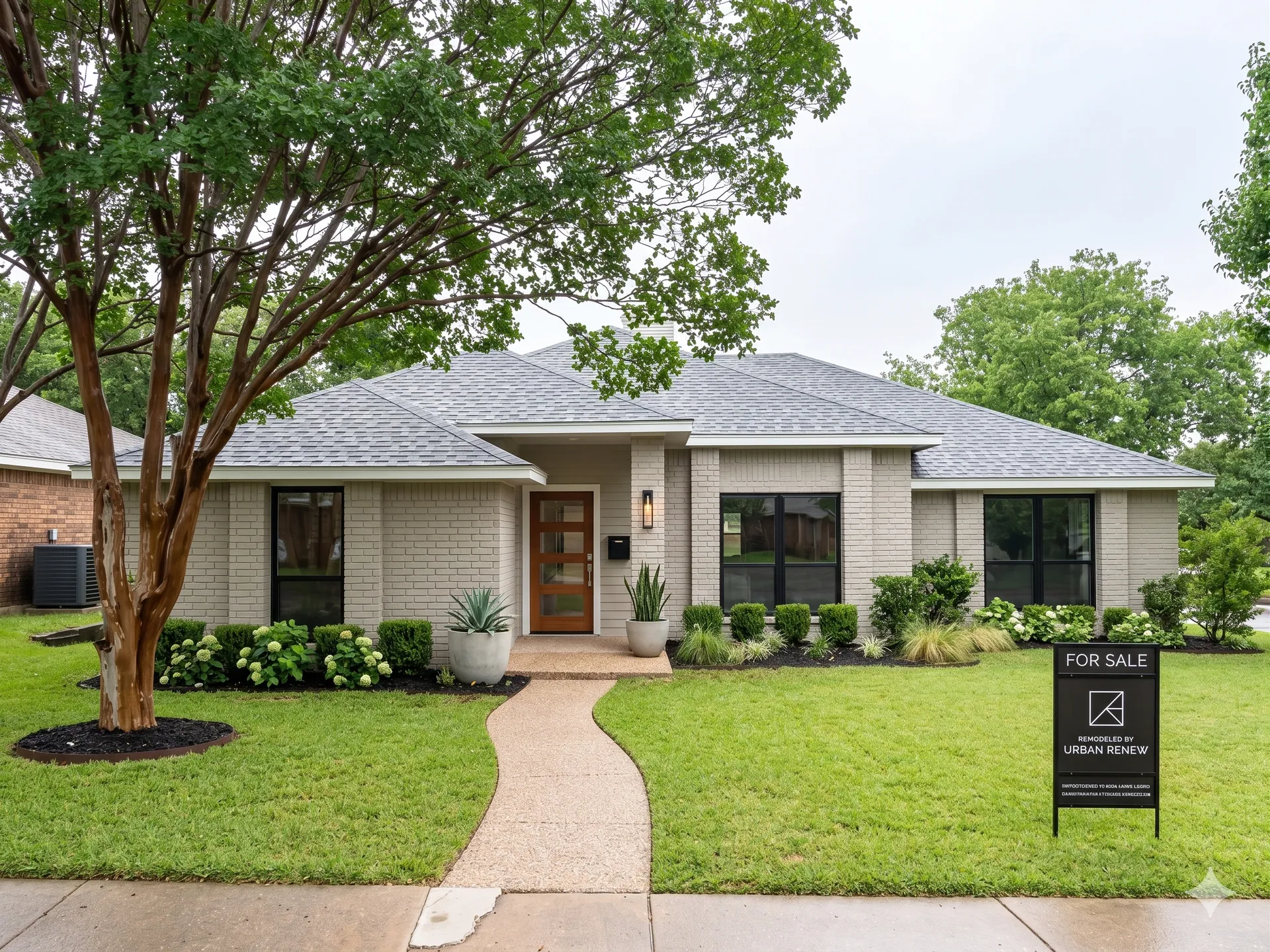
§ 01.07Roofing
Roof repair
Smallest fix that holds. Named band. Named warranty.
We name the cheapest fix before the expensive one. Lead-collared pipe boots (no EPDM in DFW heat). Written scope inside 48 hours. We say so when the right answer is replace, not repair.
Read →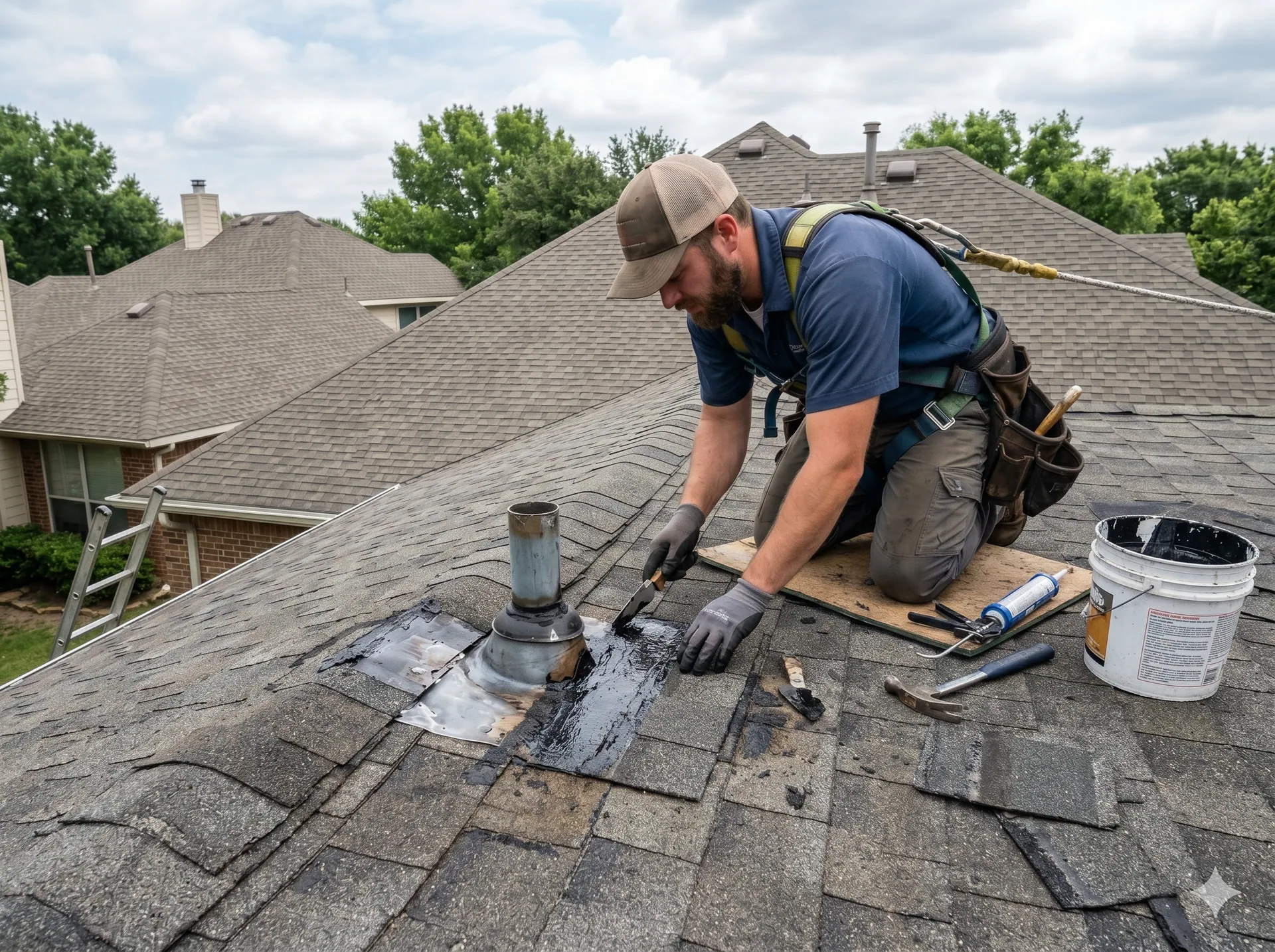
§ 01.05Roofing
Roof leak diagnostics
The leak shows where water exits, not where it enters.
Trace from the ceiling stain back to the entry — pipe boot, kickout, dead valley, or not the roof at all. The fee credits back to a repair when the repair follows.
Read →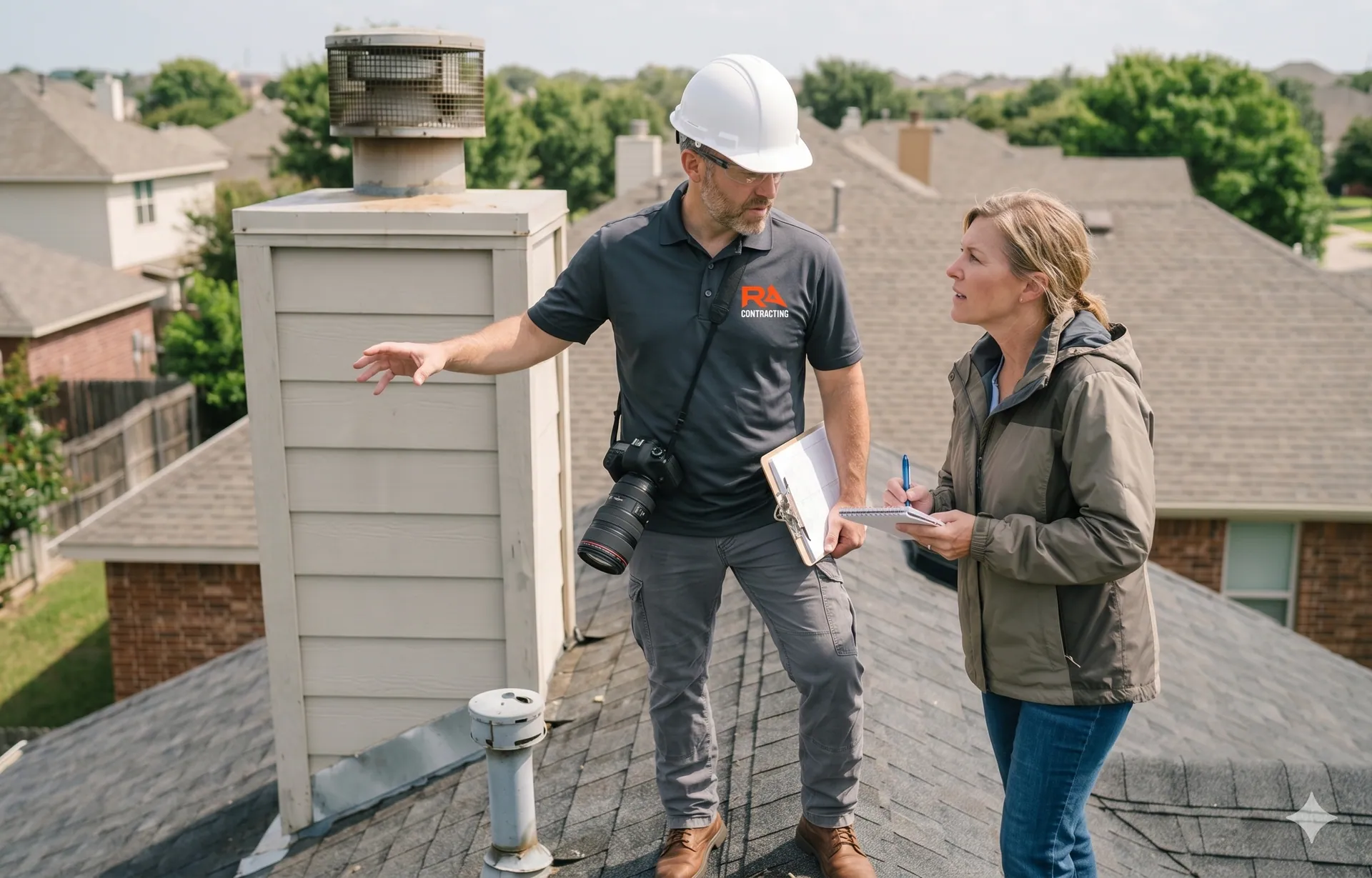
§ 01.06Roofing
Roof inspection
A second opinion you can audit.
Seven-checkpoint walk, photos with the report, severity 1–5 on each finding, plain-language scope. Written PDF inside 24 hours. We won't turn the report into a sales call.
Read →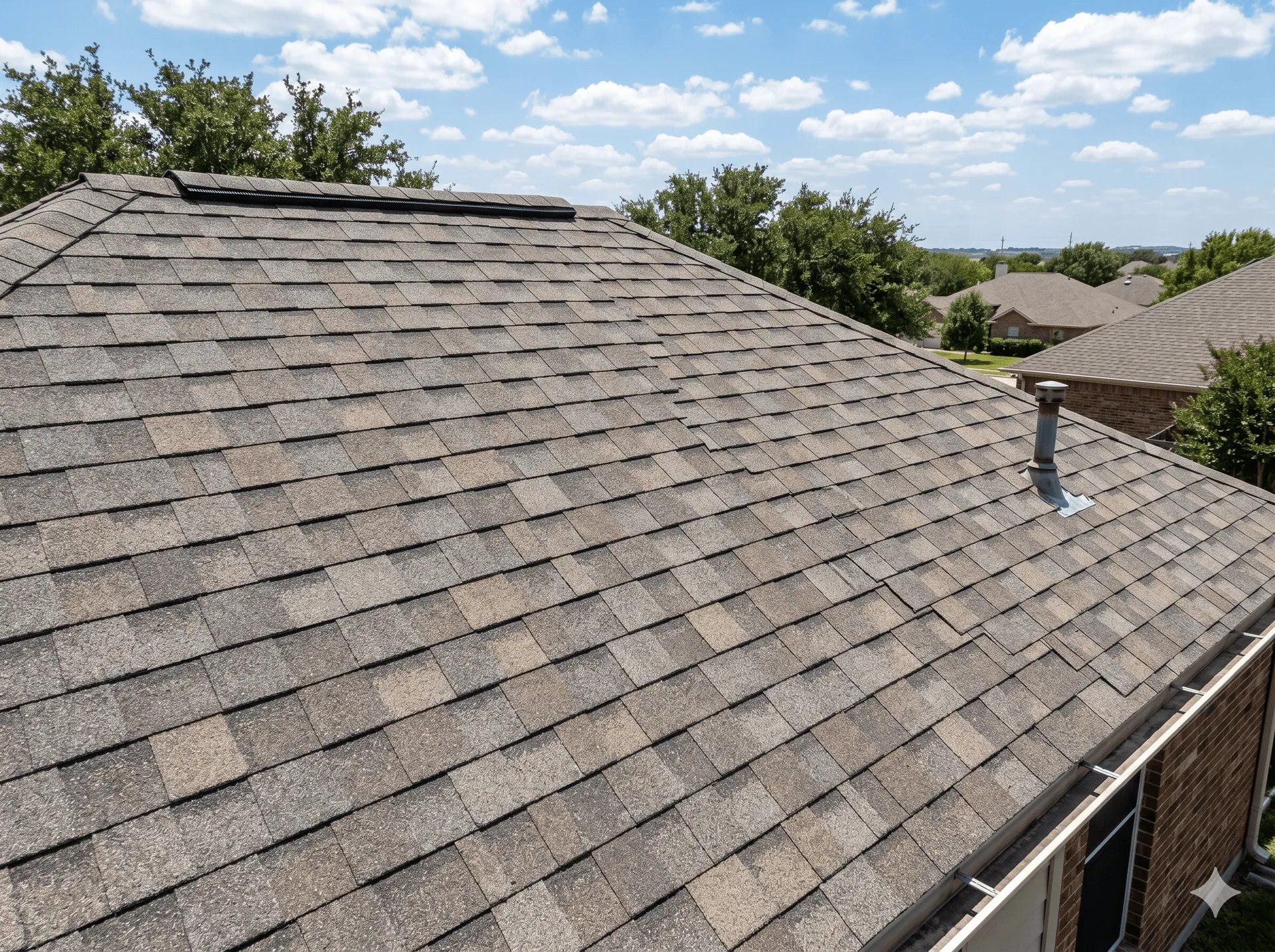
§ 01.08Roofing
Roof replacement
One day on the roof. Twelve lines in writing.
Tear-off, no overlay. Twelve-line written spec on every contract. Balanced ventilation measured before bid. 25-year transferable workmanship warranty. Both states.
Read →
§ 04.01Programs
Insurance claims
Your storm. Your scope. Your carrier's check.
Fifteen years on the carrier side. Documented loss, written scope, adjuster meeting on-site. Out-of-pocket: deductible only.
Read →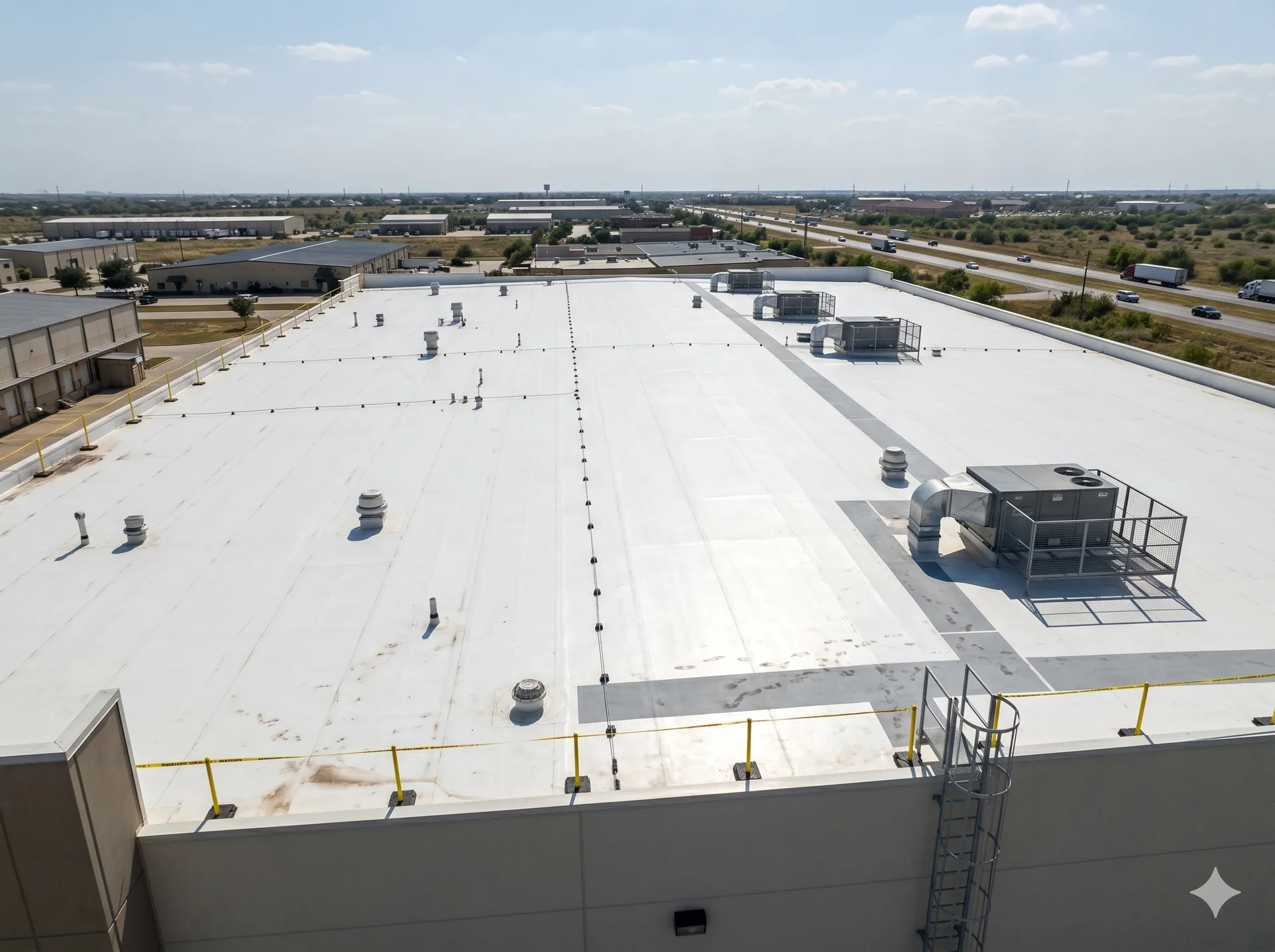
§ 06Reach the dispatch desk
Schedule the property walk. Get the IR survey on calendar.
A senior estimator on your roof. An IR moisture survey scheduled for a clear night. A probe-test report on the existing welded seams. An honest written call: repair, partial reroof, or full tear-off — with the tenant-phasing plan to match.
(214) 578-9961